-
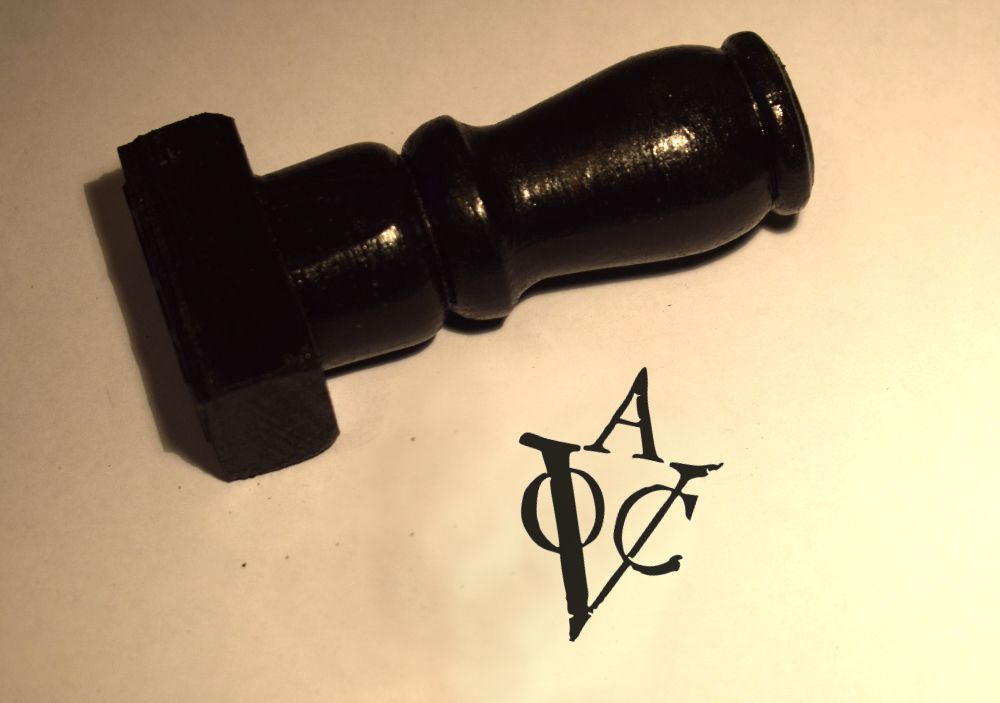
Dutch East India Trade Company Rubber Stamp
- Traditional wooden handled rubber stamp
- £19.95
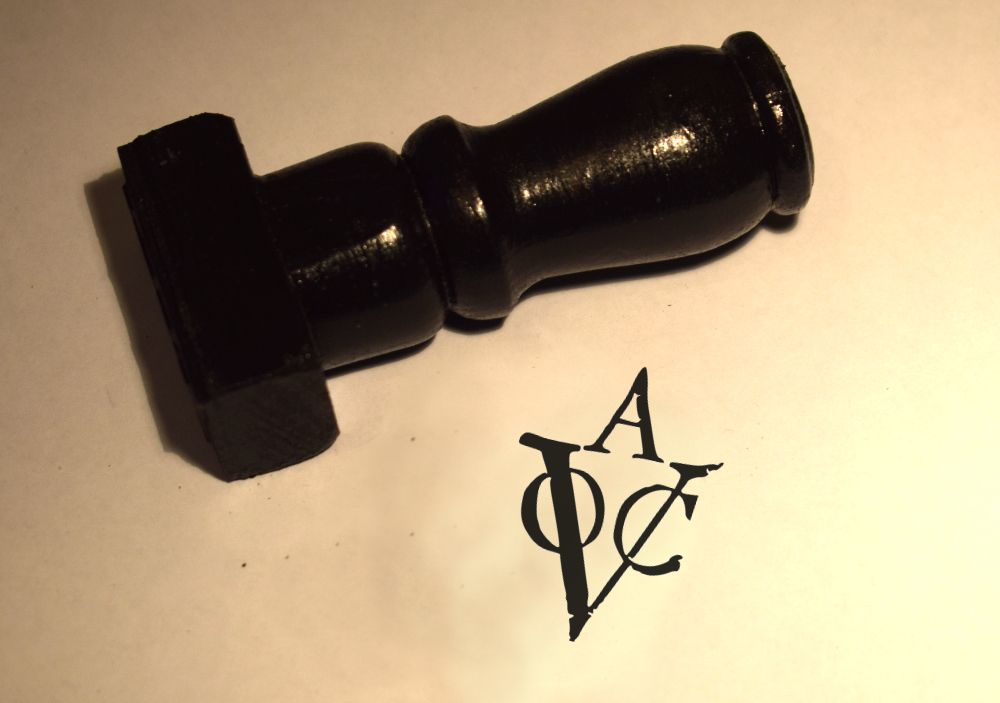
Dutch East India Company Rubber Stamp
(Amsterdam Chamber of the VOC)
The United East India Company (Dutch: Vereenigde Oostindische Compagnie, commonly known as the Dutch East India Company, was a chartered trading company and one of the first joint-stock companies in the world. Established on 20 March 1602 by the States General of the Netherlands amalgamating existing companies, it was granted a 21-year monopoly to carry out trade activities in Asia. Shares in the company could be purchased by any citizen of the Dutch Republic and bought and sold in open-air secondary markets, one of which became the Amsterdam Stock Exchange. The company possessed quasi-governmental powers, including the ability to wage war, imprison and execute convicts, negotiate treaties, strike its own coins, and establish colonies. Because it traded across multiple colonies and countries from both the East and the West, the VOC is sometimes considered to have been the world's first multinational corporation.
Statistically, the VOC eclipsed all of its rivals in the Asian trade. Between 1602 and 1796, the VOC sent nearly a million Europeans to work in the Asia trade on 4,785 ships, and netted for their efforts more than 2.5 million tons of Asian trade goods and slaves. By contrast, the rest of Europe combined sent 882,412 people from 1500 to 1795. The fleet of the English, later British East India Company, the VOC's nearest competitor, was a distant second to its total traffic, with 2,690 ships and one-fifth the tonnage of goods carried by the VOC. The VOC enjoyed huge profits from its spice monopoly through most of the 17th century.
Having been established in 1602 to profit from the Malukan spice trade, the VOC established a capital in the port city of Jayakarta in 1619 and changed its name to Batavia, now Jakarta. Over the next two centuries, the company acquired additional ports as trading bases and safeguarded their interests by taking over surrounding territory. It remained an important trading concern and paid annual dividends that averaged to about 18% of the capital for almost 200 years. Weighed down by smuggling, corruption and growing administrative costs in the late 18th century, the company went bankrupt and was formally dissolved in 1799. Its possessions and debt were taken over by the government of the Dutch Batavian Republic.
In Dutch, the name of the company was the Vereenigde Nederlandsche Geoctroyeerde Oostindische Compagnie, abbreviated as the VOC, literally the 'United Dutch Chartered East India Company' (the United East India Company). The company's monogram logo consisted of a large capital 'V' with an O on the left and a C on the right half and was possibly the first globally recognised corporate logo. It appeared on corporate items, such as flags, cannons, and coins.
The first letter of the hometown of the chamber conducting the operation was placed on top. The monogram's versatility, flexibility, clarity, simplicity, symmetry, timelessness, and symbolism are considered notable characteristics of the VOC's professionally designed logo. Those elements ensured its success at a time when the concept of the corporate identity was virtually unknown. An Australian vintner has used the VOC logo since the late 20th century, having re-registered the company's name for the purpose.
Around the world, and especially in English-speaking countries, the VOC is widely known as the 'Dutch East India Company'. The name 'Dutch East India Company' is used to make a distinction from the [British] East India Company (EIC) and other East Indian companies, such as the Danish East India Company, French East India Company, Portuguese East India Company, and the Swedish East India Company. The company's alternative names that have been used include the 'Dutch East Indies Company', 'United East India Company', 'Jan Company', or 'Jan Compagnie'.